
How to Use AI to Plan Your Trip (and Where a Local Guide Still Earns It)
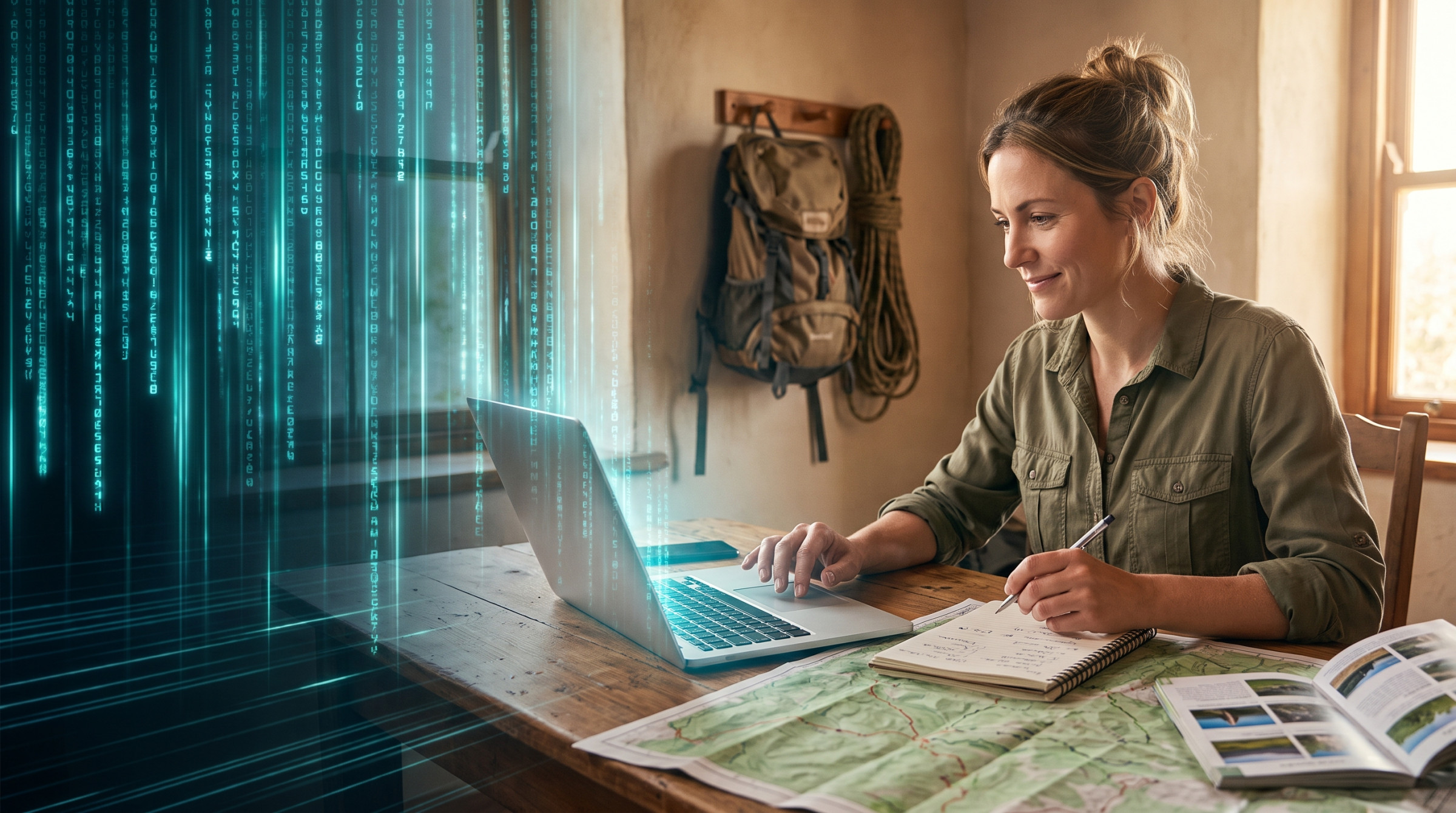
AI trip planning went from a novelty to genuinely useful with surprising speed. Ask a modern assistant to sketch an itinerary, compare flight times, or build a packing list and it returns a clean, confident answer in seconds — often better than twenty minutes of tab-hopping. But there's a real gap between “a good first draft” and “a trip you'd stake your vacation on,” and a lot of travelers find that gap the hard way: a route that doesn't exist, a “charming café” that closed three years ago, or a “moderate” trail that turns out to be a full desert scramble.
What AI Does Well
Used the right way, AI is a strong research and drafting partner. It isn't the enemy of a good trip — it's the fastest first pass you've ever had.
- Itinerary drafting and brainstorming: requests like “give me three days in Sedona” come back instantly, ready to shape — not to follow blind.
- Routing and drive logistics: AI is decent at sequencing a multi-day road trip, estimating leg times, and spacing out overnight stops.
- Fast comparison and synthesis: flight times, hotel options, and dozens of reviews summarized in a single pass.
- The grunt work: packing lists, phrase translation, “what's near my airport,” and rough budget ballparks.
The Honest Catch
AI's weakness isn't a bad attitude — it's that it mixes solid general knowledge with confident fabrications, and there's no signal telling you which is which.
- Confident hallucinations: it will invent a place, a price, or a link and state it as certain fact.
- Stale and missing data: hours, closures, permit rules, and seasonal access change constantly, and the model can't always tell what's current.
- No accountability: when the plan is wrong, the AI doesn't get the call — you do, standing at a closed road.
- No read of the real world: weather, trail conditions, and local hazards are things it can't see in real time.
Where a Local Guide Still Earns It
This is where “planning” turns into on-the-ground judgment — and where a local guide becomes worth more than any model, especially somewhere like the Sonoran Desert.
- Permits, land access, and protocols: some of Arizona's best places require guides, permits, or relationships you can't book through a search result.
- Heat, terrain, and safety judgment: knowing that “moderate” hike is a bad idea at 110°F — and what the real risk is — isn't something a model reliably flags.
- Real-time calls: a flash-flood watch, a monsoon cell, or a washed-out trail shifts the plan in minutes, and a guide reads it live.
- The stuff you'd never think to ask: water timing, the best light, where the crowds actually are, and which overlook is worth it.
A Simple Rule of Thumb
Use AI for the plan. Verify the details. And bring in a local for the parts where being wrong actually matters. Draft with the model, confirm the specifics yourself, and leave the day itself in the hands of someone who's actually on the ground.
The more you travel, the clearer that line gets — and it's the same line we've lived on for more than thirty years guiding this state. When the stakes of the day are real, plan it with someone who's already made the mistakes so you don't have to.