

March 30th, 2026 12:00am
Arizona’s Sonoran Desert is one of the most remarkable landscapes in the world. Towering rock formations, wide‑open skies, and iconic trails draw visitors from every corner of the globe. But summer in the desert is unlike summer anywhere else. Temperatures climb quickly, shade is limited, and the environment demands respect.
With the right preparation, you can explore safely and comfortably. This guide breaks down the essential information every visitor should know before heading out into the Arizona heat. Because, and this is imporant, the desert WILL try to kill you.
The desert isn’t dangerous because it’s wild. It’s dangerous because it’s extreme. Summer temperatures regularly exceed 105–115°F, and the combination of heat, sun exposure, and low humidity can overwhelm even experienced hikers. The hiking you've done before isn't the same as the hiking you're hoping to do in the desert during the hot months.
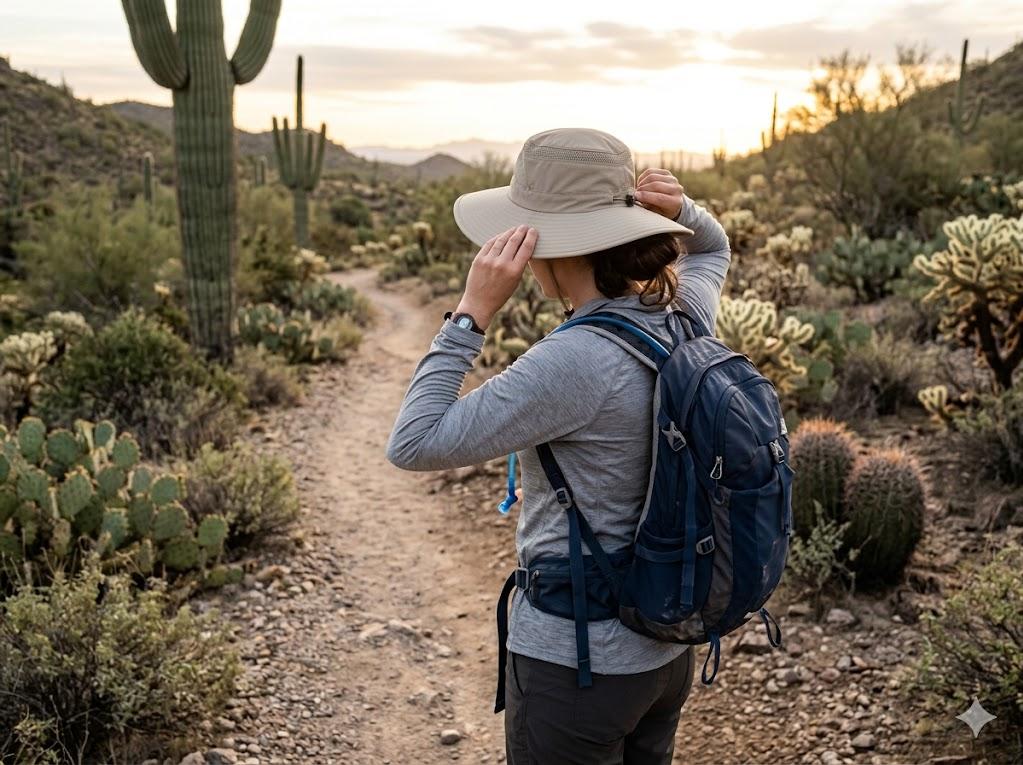 The primary risks include:
Rapid dehydration
Heat exhaustion and heat stroke
Intense UV exposure
Hot ground surfaces
Limited shade
Increased wildlife activity at dawn and dusk
These conditions don’t mean you should avoid the desert. They simply mean you should approach it with awareness and a plan.
Hydration is the single most important factor in summer safety. Visitors often underestimate how quickly the desert pulls moisture from the body. Your sweat evaporates from your skin faster than you may expect, due to the arid nature of...well, nature.
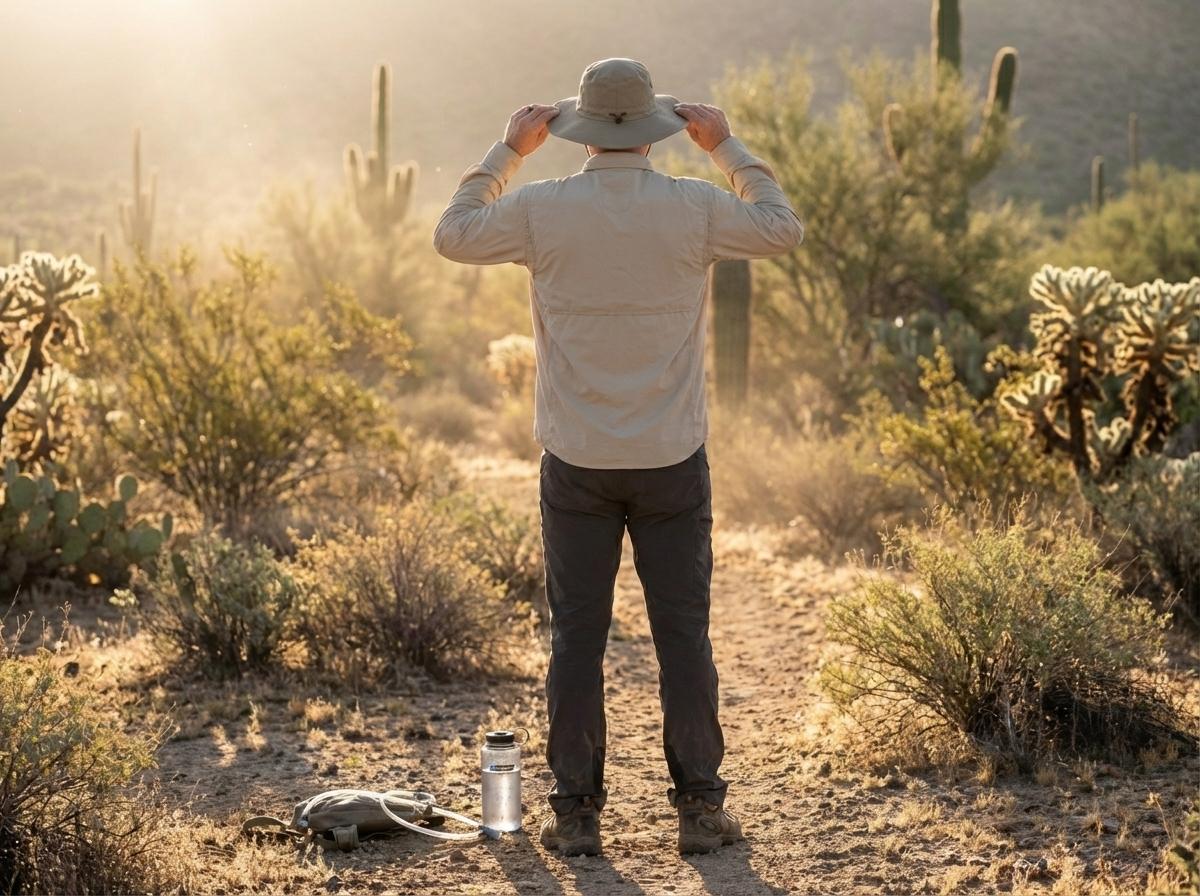 General guidance for summer outings
Bring at least one gallon (4 liters) of water per person for a half‑day outing
Start hydrating before you leave your lodging
Drink small amounts consistently rather than waiting until you feel thirsty
Add electrolytes if you’re sweating heavily or hiking uphill
Early signs of dehydration include headache, dizziness, nausea, and sudden fatigue. If anyone in your group experiences these symptoms, turn back immediately.
Timing is everything in the Arizona summer. The safest and most enjoyable hours are early morning and late evening.
Best times to be outside:
Sunrise to about 9:30 AM
After 6:30 PM
Times to avoid:
10 AM to 5 PM, when heat and UV levels peak
Midday on exposed trails with no shade
Long or strenuous hikes during summer months
If you want a full adventure during the hotter months, consider going with a professional guide who knows how to time routes safely.
Heat alone is challenging. Heat combined with direct sun exposure is what catches most visitors off guard. UV levels in Arizona are among the highest in the country, and the lack of shade means you’re exposed for long stretches.
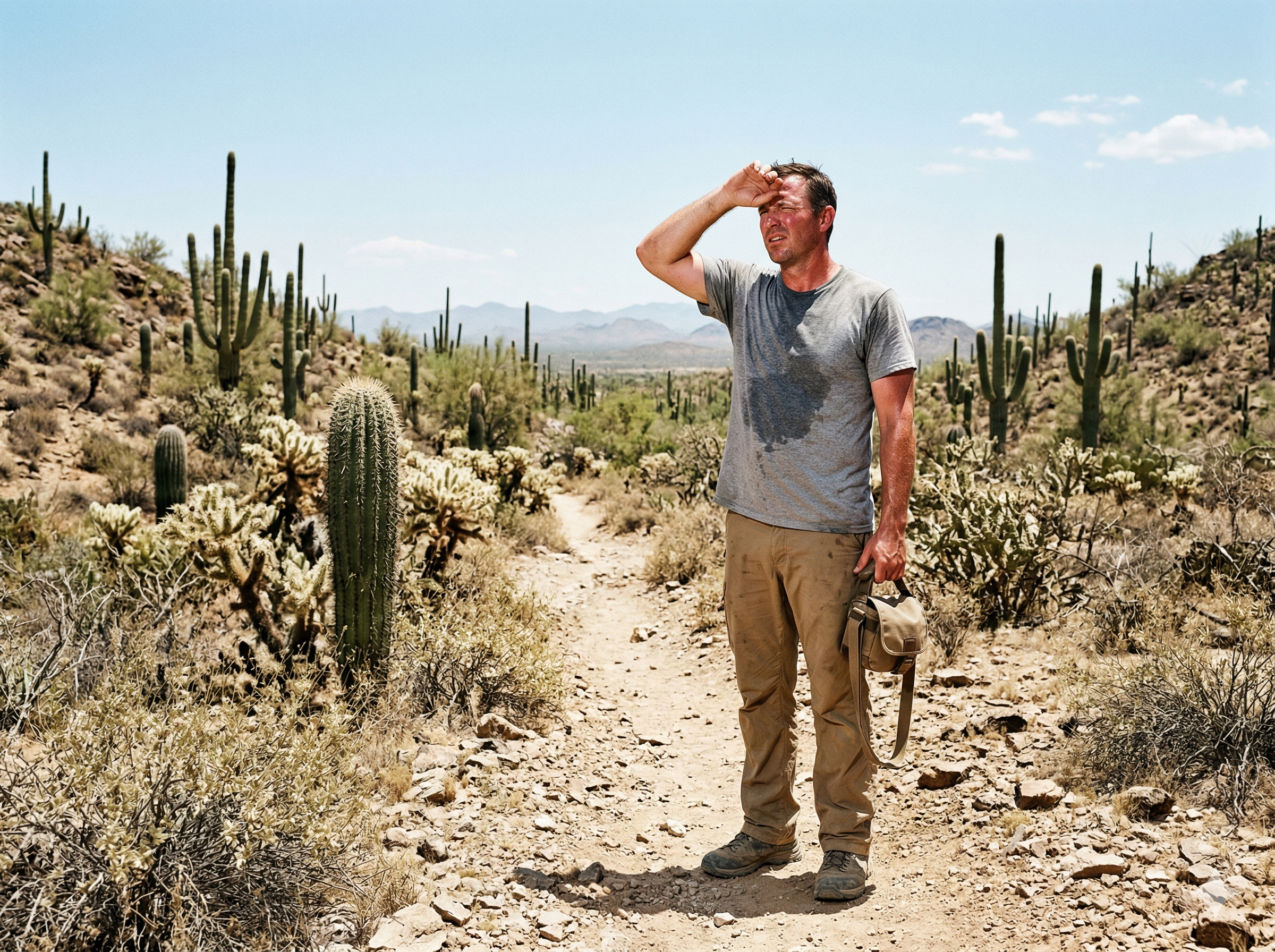 Protect yourself with:
A wide‑brimmed hat
Lightweight, long‑sleeve sun shirts
Sunscreen applied and reapplied every 90 minutes
Sunglasses
Light‑colored, breathable clothing
A simple rule of thumb: if your shadow is shorter than you are, the sun is at its strongest.
Most desert wildlife wants nothing to do with people. Still, summer is a more active season for many species, especially at dawn and dusk.
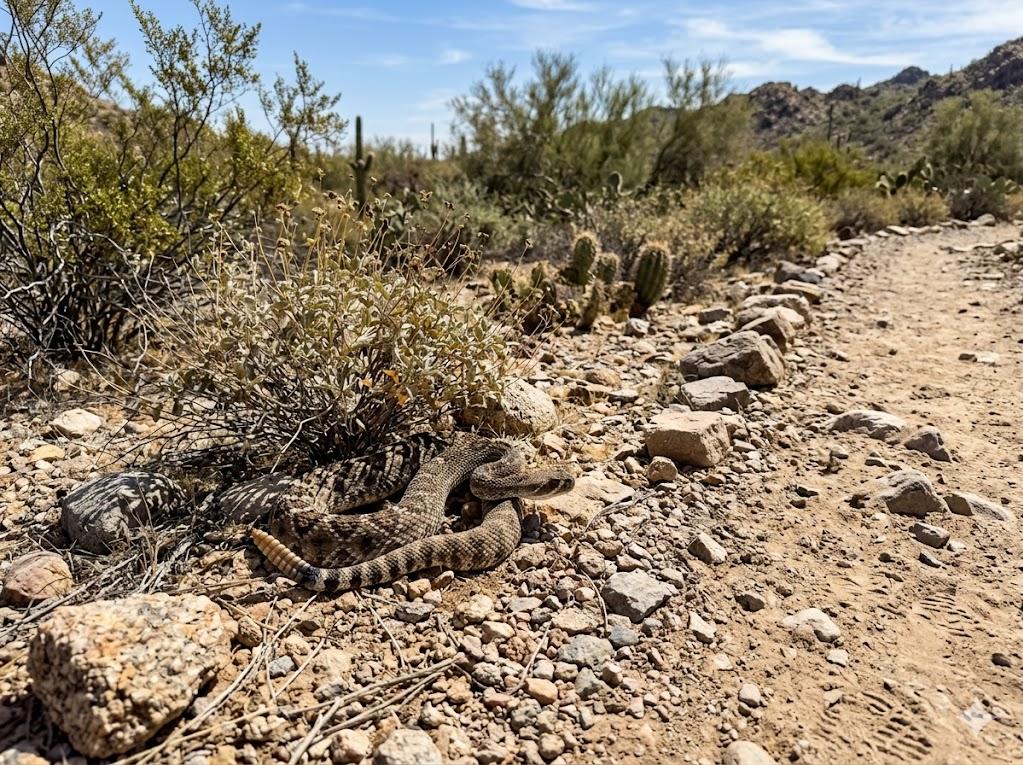 To avoid unwanted encounters:
Stay on established trails
Look before stepping over rocks or logs
Never place your hands where you can’t see
Shake out shoes and gear before putting them on
Give all wildlife plenty of space
If you encounter a rattlesnake, back away slowly. They strike only when threatened and do not chase.
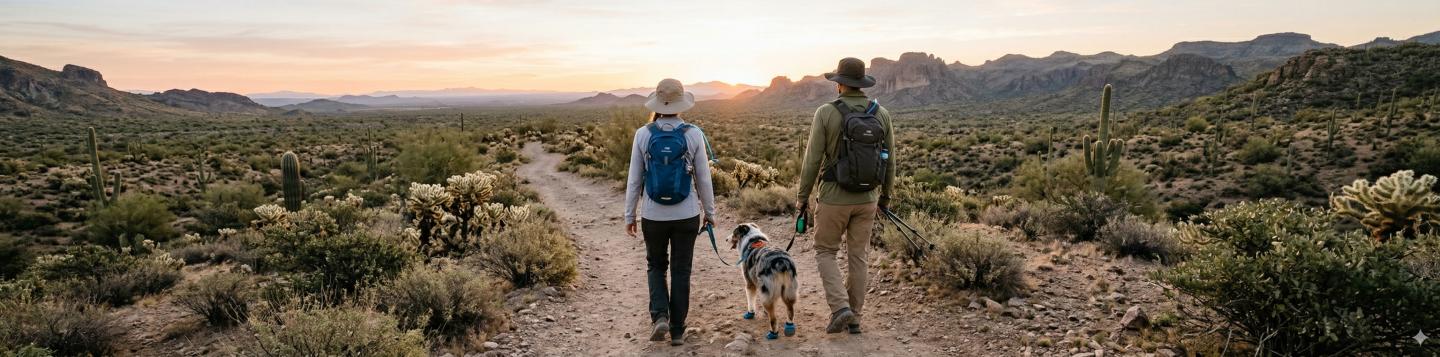
If you’re traveling with pets, Arizona’s summer requires extra caution. Dogs overheat far more quickly than humans, and hot ground surfaces can burn their paws within seconds.
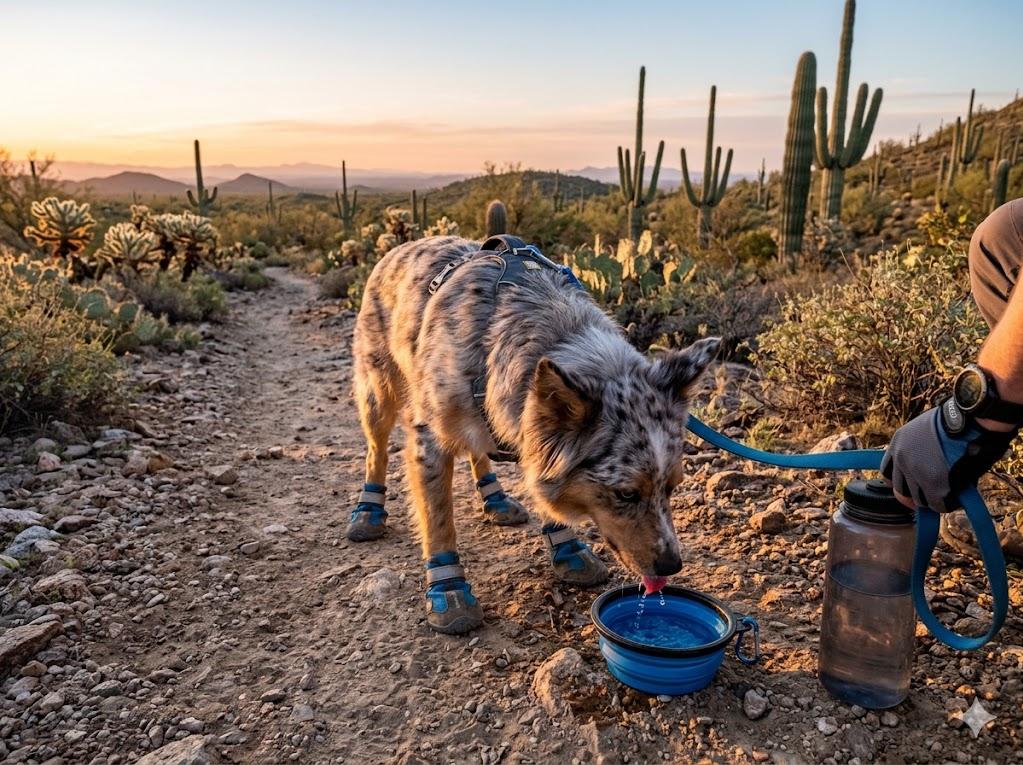 Key considerations:
Walk pets only at sunrise or after sunset
Avoid pavement and exposed trails during the day
Bring extra water specifically for them
Watch for heavy panting, slowing down, or glazed eyes
Keep them leashed to prevent wildlife encounters
Never leave pets in a parked car, even briefly
If your dog shows signs of overheating, move them to shade immediately, offer cool water, and wet their paws and belly. Seek veterinary care if symptoms don’t improve quickly.
Good judgment is the most important safety tool you have. Turn back if:
You’ve consumed half your water
Someone in your group feels unwell
The temperature is rising faster than expected
Clouds build quickly during monsoon season
There is no downside to ending an outing early. The desert will always be here for another day.
Guided adventures remove the guesswork from summer exploration. A professional guide manages timing, hydration planning, route selection, weather monitoring, and wildlife awareness. You get the experience without the stress.
Location: Blog >> Arizona Desert Safety in the Summer: A Local Guide to Staying Safe and Enjoying Your Adventure
Category(s):
Arizona Adventure Vacations


Home | Blog | Gallery | Contact Us | Privacy Policy
©2026 360 Adventures